Responsibility
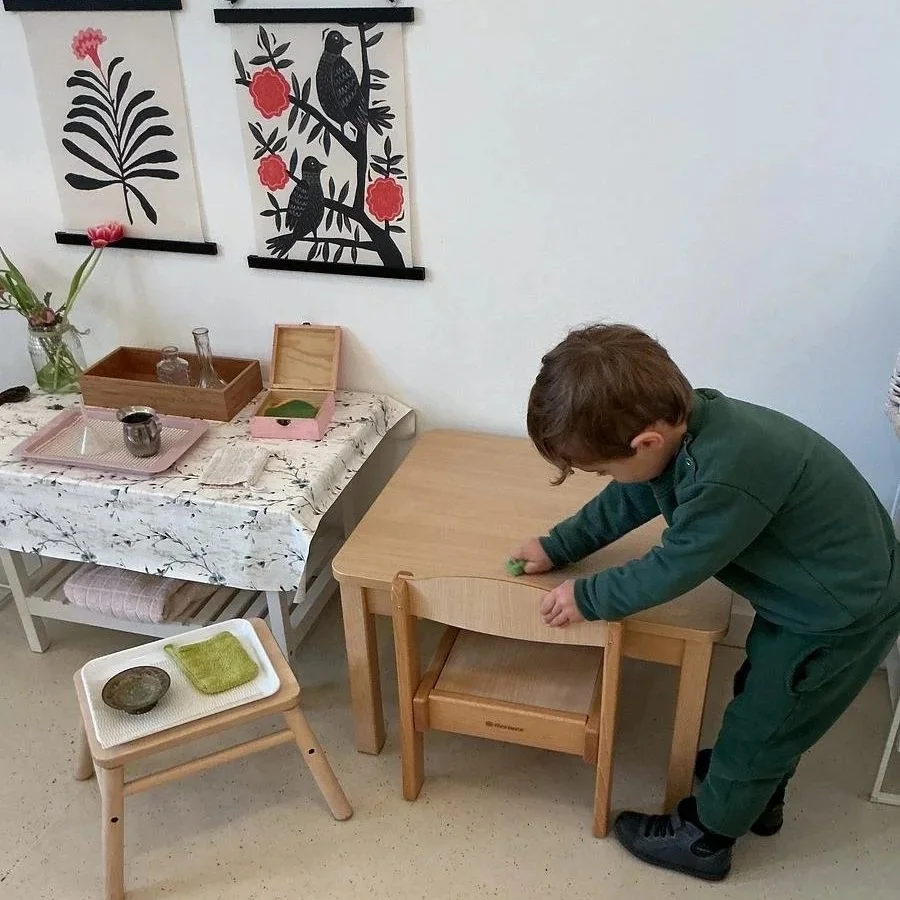
Cleaning the table in Infant Community
As part of our series on looking more in depth at the school’s values, this month we are looking at Responsibility.
Responsibility is one of the central pillars of a Montessori education. Rather than being imposed through rules or external rewards, responsibility is gradually developed through the child’s daily experiences in a carefully prepared environment. In a Montessori classroom, children learn that their actions have real consequences for themselves, for others, and for the community as a whole.
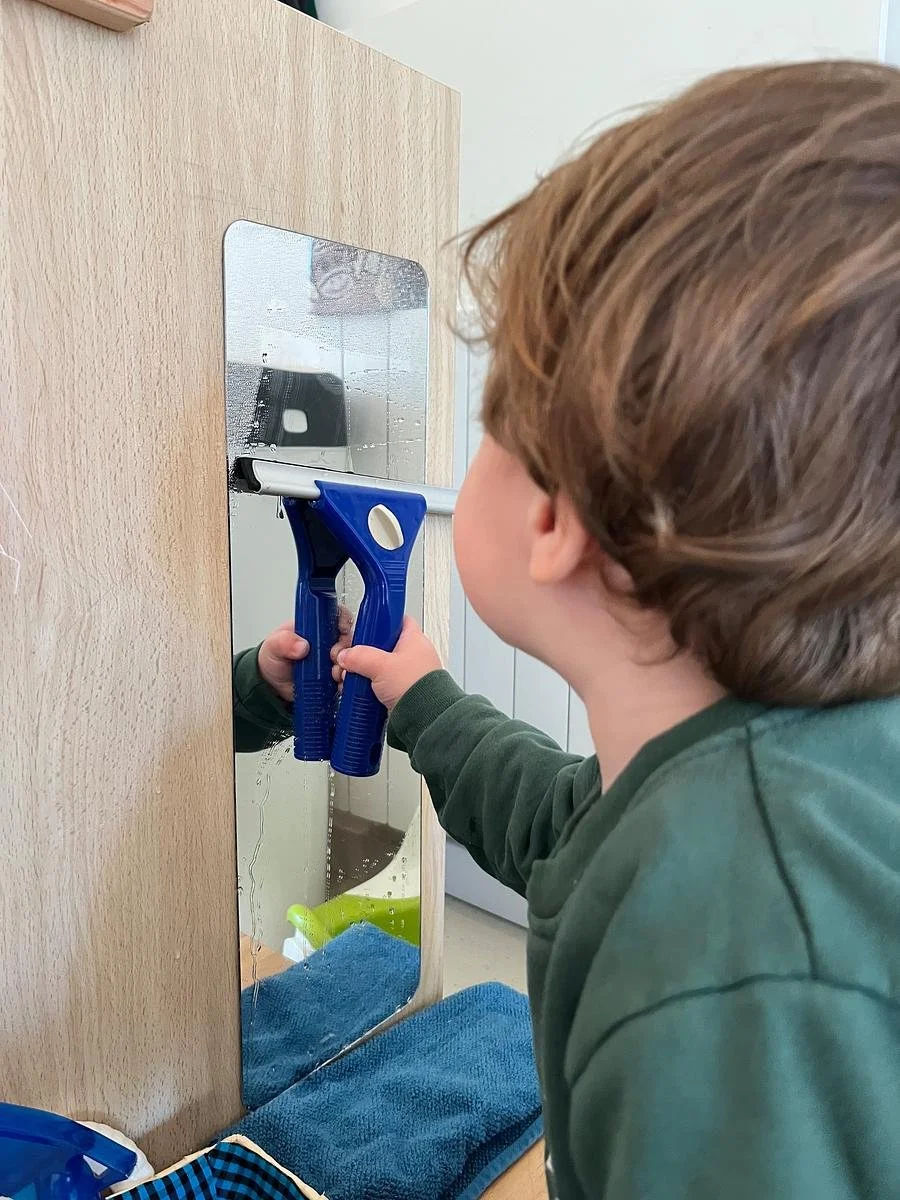
Cleaning windows in Nido
From the earliest years, children are given meaningful opportunities to take care of their surroundings. They learn to return materials to their proper place, clean up after their work, care for classroom plants or animals, and contribute to maintaining the environment. These small, practical tasks are not chores assigned by adults but essential parts of the life of the classroom. Through them, children begin to understand that they are capable and trusted members of a community.
Responsibility in Montessori is closely linked to freedom. Children are given the freedom to choose their work, move around the classroom, and manage their time. However, this freedom always exists within clear limits: respecting others, respecting the materials, and respecting the environment. In this way, children learn that freedom and responsibility are inseparable. The ability to make choices also means accepting the consequences of those choices.
The mixed-age structure of Montessori classrooms also plays an important role in developing responsibility. Older students naturally take on mentoring roles, helping younger classmates learn how to use materials or navigate the classroom routines. This strengthens leadership, empathy, and a sense of duty toward others. Younger students, in turn, see positive examples of responsible behaviour in action.
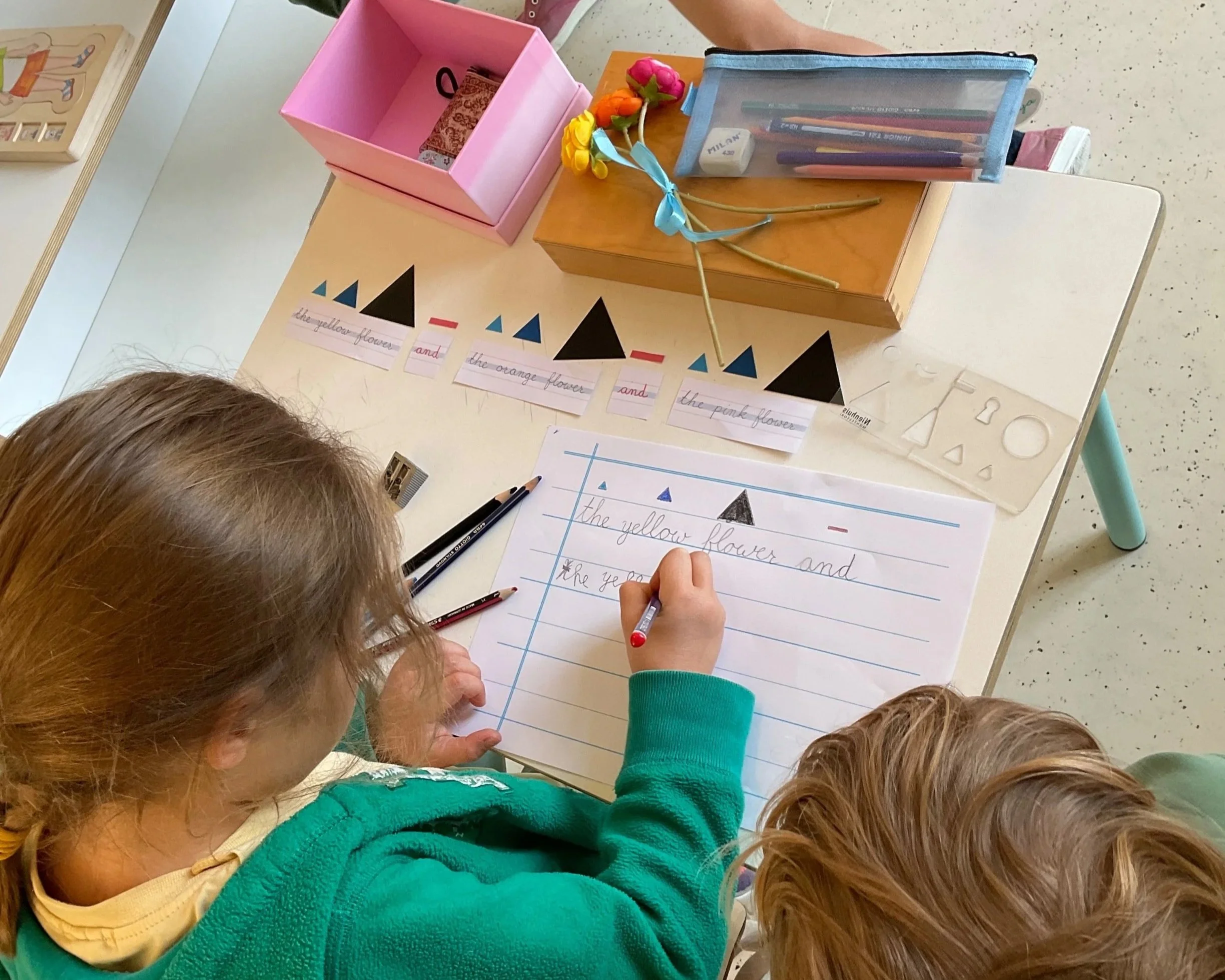
Observing how older students work in Children’s House
Teachers in Montessori environments guide rather than direct. Instead of solving every problem for the child, they encourage reflection and problem-solving. When conflicts arise, children are supported in discussing the issue, listening to others, and finding respectful solutions. The photo above shows a class community meeting lead by an older student. Over time, this helps them develop internal discipline and accountability.
Ultimately, responsibility in Montessori education is not about obedience but about ownership. Children learn that they are active participants in their own learning and in the wellbeing of their community. By trusting children with real responsibility from an early age, Montessori education helps them grow into thoughtful, capable individuals who understand their role in contributing positively to the world.
