
Peace
In our school, peace is something we aim to practise in everyday interactions, not just something we talk about. Guided by Montessori principles, we work to create an environment where children feel respected, listened to and able to grow into independent, thoughtful individuals.
Nonviolent Communication, developed by psychologist Marshall B. Rosenberg, gives us a simple way to approach conversations with more clarity and less reactivity. Rather than jumping to judgement or blame, we try to focus on what is actually happening, how we feel and what we need.
In a Montessori setting, children are encouraged to develop both independence and responsibility. This includes how they relate to others. Teachers support children as guides, helping them to work through disagreements rather than immediately stepping in to solve them. This gives children the opportunity to practise problem-solving and to take responsibility for their actions.
Of course, disagreements and misunderstandings are a normal part of being in a community. They are not something to avoid, but something to work through. With support, children learn how to express themselves more clearly and to understand that other people may see things differently.
Nonviolent Communication can help with this. It encourages us to notice what is happening without judgement, to name our feelings, to think about the need behind those feelings, and to make clear, respectful requests. For example, instead of saying “You took my work,” a child might say, “I feel upset because I need to finish my activity. Can I have it back when you’re finished?”
Some practical ways we can support this at home and at school include:
Giving children time to calm down before responding to a situation
Encouraging them to use simple “I” statements, such as “I feel…” or “I need…”
Modelling calm, respectful language, even when things are not going to plan
Listening without interrupting, so children feel heard before we respond
Helping children name their feelings, especially when they are finding it difficult
The prepared environment in Montessori also supports this approach. A calm, orderly space helps children to feel settled and focused, while lessons in grace and courtesy give them the tools to interact respectfully with others in everyday situations.
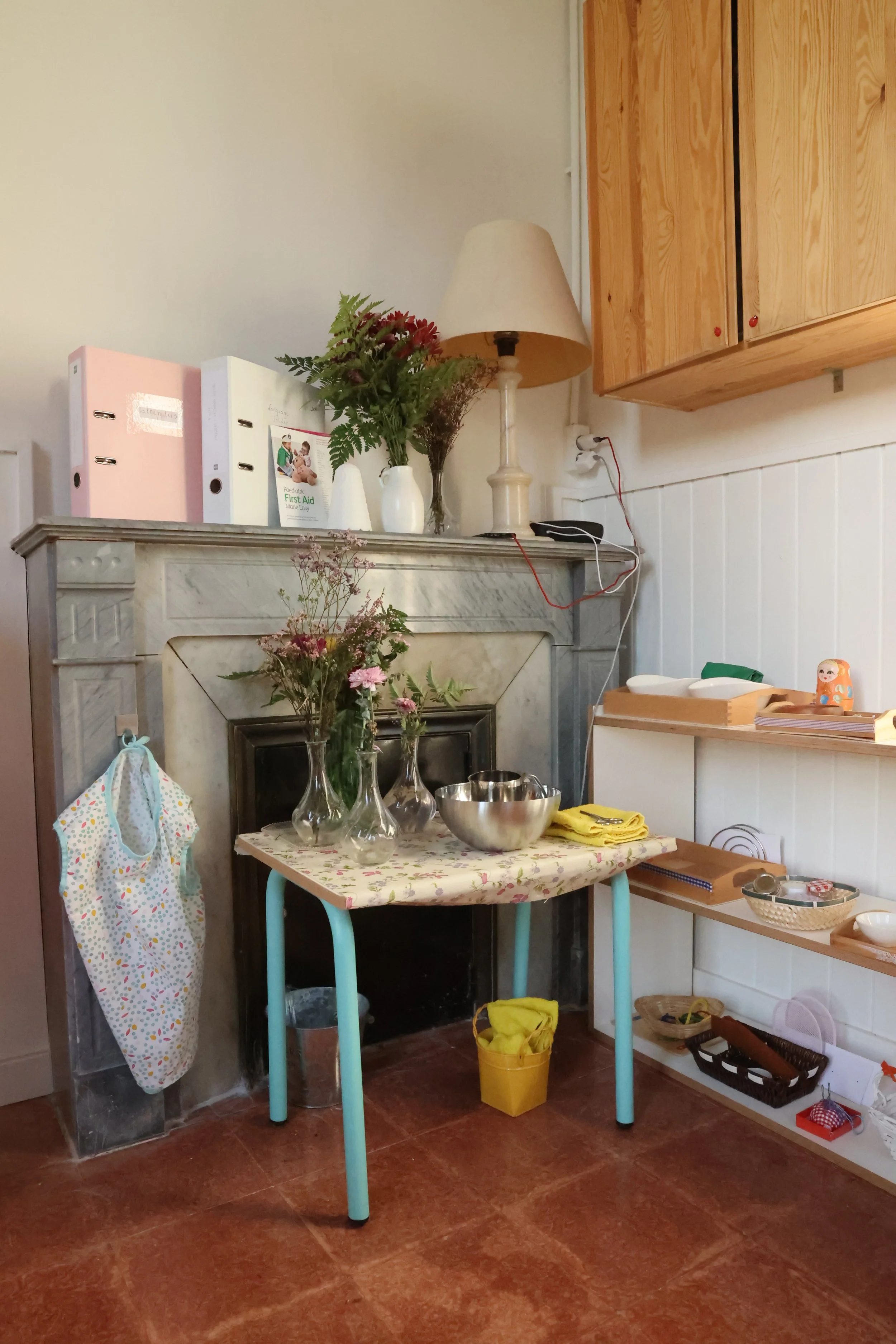
Peace education is part of daily life in a Montessori classroom. It shows up in the way we speak to each other, how we handle conflict, and how we support one another to learn and grow. It is not about avoiding disagreements, but about learning how to handle them in a respectful and constructive way.
By continuing to model and practise these approaches, we help children build the skills they need to communicate clearly, listen well, and take responsibility for their actions. These are skills that support them not just in school, but in life.
